
.png)

If you export goods from Europe and haven’t mapped your ESG obligations yet, you’re already behind. Key regulations like EUDR, CSRD, CSDDD, and CPR are moving from policy documents to active enforcement, with most major deadlines landing in 2026 and beyond. For Quality, Environment, and Sustainability Managers in manufacturing and construction, this isn’t a distant compliance exercise. It’s a market access issue. Miss the requirements, and you risk losing contracts, facing fines, or being locked out of EU procurement entirely. This guide breaks down exactly what applies to your exports, how to operationalize it, and where the real business value lies.
Table of Contents
- Decoding ESG regulations for exports: What applies and when
- How ESG regulations affect your export workflow
- Edge cases, exemptions, and nuances: What most exporters miss
- Benchmarking the business impact: Compliance, costs, and value
- Beyond checklists: Where ESG compliance unlocks real exporter advantage
- How ECONOS helps you navigate ESG export compliance
- Frequently asked questions
Key Takeaways
| Point | Details |
|---|---|
| Know your regulations | Identify which core ESG rules (EUDR, CSRD, CSDDD, CPR) impact your exports and when they take effect. |
| Build workflows early | Investing in traceability, data collection, and digital reporting systems reduces cost and complexity. |
| Use exemptions wisely | Take advantage of country, company size, and product-based exemptions for simpler compliance where possible. |
| Compliance brings value | Smart ESG strategies save costs and improve competitive positioning in export markets. |
| Expert support accelerates success | Specialized consulting speeds up compliance, ensures accuracy, and maximizes your export potential. |
Decoding ESG regulations for exports: What applies and when
The European regulatory landscape for exporters has shifted significantly. Four regulations now define the baseline for ESG compliance across most export categories.
EUDR (EU Deforestation Regulation) targets seven commodity groups: cattle, cocoa, coffee, oil palm, rubber, soya, and wood products. It requires a due diligence statement (DDS) proving goods are deforestation-free, with enforcement timelines now confirmed for large operators and SMEs at different dates in 2025 and 2026. The full regulation text is available for those who want to check exact product codes.
CSRD (Corporate Sustainability Reporting Directive) mandates sustainability reporting under ESRS standards. Large companies with over 500 employees were first in scope; the threshold drops to 1,000 employees for some categories in later phases. Non-EU companies with EU turnover above €150 million are also pulled in.
CSDDD (Corporate Sustainability Due Diligence Directive) goes further, requiring companies to identify, prevent, and remediate adverse human rights and environmental impacts across their entire value chain. It applies to EU companies with over 1,000 employees and €450 million in global turnover, with phased enforcement through 2027 to 2029.
CPR (Construction Products Regulation) introduces mandatory environmental product declarations (EPDs) and digital product passports (DPPs) for construction materials entering the EU market. This directly affects manufacturers exporting steel, concrete, insulation, and similar products.
Here’s a quick overview of scope and timelines:
| Regulation | Who it covers | Key deadline |
|---|---|---|
| EUDR | Commodity exporters (7 product groups) | Active from 2025/2026 |
| CSRD | Large EU companies + non-EU with €150M EU turnover | Phase-in 2024 to 2028 |
| CSDDD | EU companies 1,000+ employees, €450M+ turnover | Phase-in 2027 to 2029 |
| CPR | Construction product manufacturers | Rolling from 2026 |
A few things worth flagging for exporters specifically:
- CBAM (Carbon Border Adjustment Mechanism) primarily affects imports into the EU, not exports. If you’re exporting from the EU, CBAM is less relevant, but it shapes the competitive environment you’re selling into.
- Non-EU companies with significant EU revenue are not exempt from CSRD or CSDDD. If your turnover in the EU crosses the threshold, you’re in scope.
- Explore the ESG regulations overview for a broader breakdown of how these rules interact.
How ESG regulations affect your export workflow
Once you understand which rules apply, the next question is practical: what do you actually need to do? Here’s how each regulation translates into workflow changes.
EUDR compliance centers on three actions: traceability, geolocation data, and risk assessment. You need to know where your raw materials come from, down to the plot of land in some cases. This means collecting GPS coordinates from suppliers, running a risk assessment against deforestation benchmarks, and submitting a DDS through the TRACES NT system before goods enter or leave the EU market. EUDR and CSRD both require robust supplier data collection, which is often the hardest part for companies with fragmented supply chains.
CSRD and CSDDD compliance requires you to conduct a double materiality assessment. That means identifying which sustainability topics are material from both a financial impact perspective (how ESG risks affect your business) and an impact perspective (how your business affects people and the environment). You’ll also need to report GHG emissions across Scope 1 (direct), Scope 2 (purchased energy), and Scope 3 (value chain), which is where most emissions actually sit.

CPR compliance means preparing EPDs for your construction products, linked to life cycle assessments (LCA). Digital product passports are becoming mandatory for certain product categories, requiring structured data on materials, recyclability, and environmental performance. See how LCA for product declarations works in practice.
Here’s a practical action sequence for manufacturing exporters:
- Map your value chain and identify which regulations apply to each product line.
- Audit existing supplier data and identify gaps in traceability or environmental documentation.
- Conduct or commission a double materiality assessment for CSRD scope.
- Calculate Scope 1, 2, and 3 GHG emissions with documented methodology.
- Prepare or update EPDs for construction products, linked to verified LCA data.
- Integrate DDS submission into your export documentation workflow.
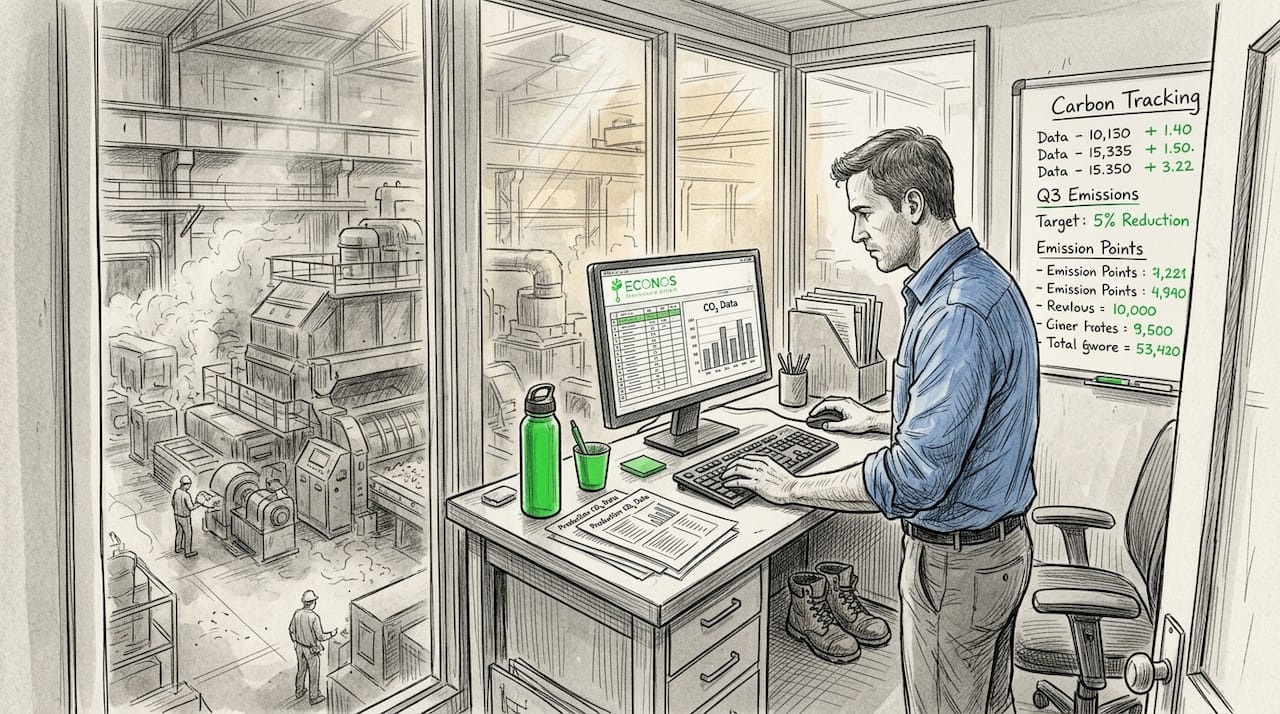
A real-world example: a European steel exporter built carbon tracking into its production management system, enabling real-time EU ETS compliance and reducing manual reporting time by over 40%.
Pro Tip: Don’t treat supplier audits as a one-time event. Build a rolling data collection process that updates supplier risk profiles annually, especially for EUDR-relevant commodities.
For a deeper look at what structured ESG reporting requirements look like in practice, the compliance framework matters as much as the data itself.
Edge cases, exemptions, and nuances: What most exporters miss
Even experienced compliance teams get caught out by the fine print. Here are the nuances that most exporters overlook.
EUDR simplified DDS: Companies operating as primary operators in countries classified as low-risk by the European Commission can use a simplified due diligence procedure. This reduces the documentation burden significantly. However, the country risk classification is dynamic, so what’s low-risk today may not be tomorrow.
CSRD size exemptions: The directive includes a carve-out for companies under 1,000 employees in certain reporting phases. But here’s the catch: even if you’re exempt from direct reporting, your large customers who are in scope will request value chain data from you. The NESRS standard sets limits on how much information large companies can request from SMEs in their supply chain, which is worth knowing if you’re on the receiving end of data requests.
Value chain information caps: CSRD includes a proportionality principle. Large companies cannot demand unlimited data from smaller suppliers. There are defined limits on what can be requested, and knowing these protects you from over-compliance burdens.
Key nuances to watch:
- EUDR simplified DDS applies only to specific country-risk categories, not all SMEs.
- Multinational exporters with complex corporate structures may face overlapping obligations under both EU and home-country frameworks.
- Assuming that group-level compliance covers all subsidiaries is a common and costly mistake.
- Regulatory harmonization between EU and US ESG frameworks is progressing slowly, so don’t assume alignment.
“The proportionality principle in CSRD is genuinely protective for mid-size suppliers, but only if you know it exists and invoke it clearly in your customer negotiations.”
Pro Tip: Document every data request you receive from customers under CSRD value chain provisions. If requests exceed what the regulation allows, you have grounds to push back, and doing so professionally builds credibility.
For a practical checklist on staying within scope, the EU compliance best practices resource covers the most common traps.
Benchmarking the business impact: Compliance, costs, and value
Let’s be honest: ESG compliance has a cost. But the data increasingly shows that smart compliance pays back, often significantly.
The numbers are striking. A steel firm cut EU ETS costs by 60% through systematic carbon tracking and process optimization. A manufacturer avoided €2.3 million in potential costs by proactively tracking Scope 3 emissions and identifying inefficiencies before regulators did. Novoferm, a door and gate manufacturer, reduced EPD creation time and cost substantially by digitizing its LCA and EPD management process.
The business case breaks down into four areas:
- Cost avoidance: Non-compliance fines under EUDR can reach 4% of EU annual turnover. CSRD penalties vary by member state but are real and escalating.
- Procurement eligibility: An increasing share of public and private procurement in Europe requires ESG documentation. Without it, you’re simply not in the running.
- Green premium: Buyers in construction and manufacturing are paying measurable premiums for verified low-carbon or sustainably sourced products. This is no longer theoretical.
- Audit efficiency: Companies that build internal ESG capacity spend significantly less on external audits and third-party verification over time.
The CBAM enforcement from January 2026 also signals where the broader regulatory direction is heading. Carbon pricing is becoming embedded in trade, and companies that have already measured and reduced their emissions are better positioned to compete.
For context on what leading firms have done, the ESG compliance success stories and ESG best practice guides offer concrete reference points across industries.
Beyond checklists: Where ESG compliance unlocks real exporter advantage
Here’s something we’ve observed working with manufacturers and exporters across multiple industries: the companies that treat ESG compliance as a checklist exercise consistently spend more and gain less than those who treat it as a systems problem.
The checklist approach creates fragile compliance. You pass this year’s audit, but you haven’t built the internal knowledge or data infrastructure to adapt when the rules shift, and they will shift. The companies that invest in traceability systems, LCA-based product data, and internal GHG accounting capacity aren’t just compliant. They’re faster to respond, cheaper to audit, and more credible to buyers.
Stakeholder trust and the green premium are increasingly real, not just theoretical talking points. We’ve seen clients win contracts specifically because they could produce verified EPDs on short notice, while competitors scrambled. That’s a direct revenue consequence of early investment.
The uncomfortable truth is that shortcutting ESG for exports is a false economy. The cost of reactive compliance, rushed data collection, and emergency audits almost always exceeds the cost of building it right the first time. The exporter advantage cases we’ve documented confirm this pattern consistently.
How ECONOS helps you navigate ESG export compliance
Getting ESG compliance right for exports requires more than reading the regulations. It requires building the internal capacity to collect data, run calculations, and respond to audits without depending on external consultants every time.
At ECONOS, we help manufacturing and construction exporters build exactly that capacity. Whether you need streamlined ESG reporting under CSRD, a full carbon footprint assessment covering Scope 1, 2, and 3, or support preparing for EcoVadis certification, we work with you to get compliant, get rated, and stay ahead. Our training-first model means your team understands what they’re doing and why, not just what to submit. Ready to make ESG compliance a competitive tool? Let’s talk.
Frequently asked questions
What ESG regulations apply to European exports as of 2026?
EUDR, CSRD, CSDDD, and CPR cover supply chain due diligence, sustainability reporting, and environmental product standards, with enforcement for most large exporters from late 2026. Each regulation has different scope thresholds and timelines, so applicability depends on your company size, sector, and product type.
Which exported products are most affected under the EUDR?
Cattle, cocoa, coffee, oil palm, rubber, soya, and wood products require a deforestation-free due diligence statement for export. Downstream products made from these commodities, such as leather goods or paper, are also included.
What are the main compliance steps for manufacturing and construction exporters?
Key steps include mapping the value chain, collecting supplier data, conducting risk assessments, reporting GHG emissions across Scope 1 to 3, and preparing digital product passports or EPDs. The sequence matters: traceability data must be in place before you can complete a meaningful risk assessment.
Are there exemptions or simplified rules for smaller exporters?
EUDR simplified DDS applies to small firms operating in low-risk countries, and CSRD has exemptions for companies under 1,000 employees in certain reporting phases. Even exempt companies often face indirect data requests from larger customers in their supply chain.
What are the business benefits of investing in early ESG compliance?
Early compliance can reduce reporting costs, enable market access, and avoid fines, with one steel firm cutting EU ETS costs by 60% through proactive carbon tracking. It also creates a competitive edge through green premiums and eligibility for sustainability-linked procurement.